Team

Christopher Haworth
Christopher Haworth is Professor of Twenty-First Century Music at University of Birmingham. As a musicologist, his work examines questions of skill and knowledge practice, interdisciplinarity, theory and intellection, and political economy as they arise in contemporary and historical electronic music. Work forthcoming includes a critical history of the CCRU and a history of AI refusal in experimental music, across 'symbolic' and 'expert systems' waves. As a computer musician, Christopher works with experimental sound synthesis and psychoacoustic phenomena, and has releases past and forthcoming on Superpang and ETAT.
Christopher is the PI for SYNCULTURE and will work across most studies, particularly study 1, Musical Synthetic Media, on the history of voice cloning and the relevance of synthesis to new and historical forms of amateurism in music; study 5, Authorship and Inventorship, on the changing legal ontology of synthesis and the cultural work it does; and study 6, Towards Synthesis Culture, on the theorization of synthesis as a cultural technique.

Erik Nyström
Erik Nyström is a composer of electroacoustic and computer music and Senior Lecturer in Music at City St George’s, University of London. Recurring areas of interest in his practice include synthetic sound, spatial texture, generative systems, and posthuman agency.
His SYNCULTURE study on Theorising Synthetic Models Beyond the Standard-Nonstandard Dichotomy investigates how the modelling of sound is transforming with contemporary neural synthesis algorithms, aiming for a new understanding of the relation between world, model, and synthesised sound. The outcomes will also yield contributions to Study 6, Towards Synthesis Culture.

Maria Perevedentseva
Maria Perevedentseva is Lecturer in Musicology at the University of Salford, with research specialisms in the analysis, history, and criticism of electronic, dance, and experimental musics, and music and online cultures. Her publications to date have focused on timbre cognition, meaning, and discourse in electronic dance music scenes, and on the working practices and technological imaginaries surrounding independent experimental musicians’ use of online platforms.
Her SYNCULTURE study on Aesthetics and Discourse will employ natural language processing and discourse analysis methods to identify patterns of language use that encode the aesthetic values native to twenty-first century synthetic media among different musical communities. These findings will inform the development of new analytical frameworks for Study 6, Towards Synthesis Culture.
 Photo: Agata Lozinska/The Wire
Marcin Pietruszewski
Marcin Pietruszewski is an artist working with synthetic sound, a researcher, and a programmer. His practice approaches the design of computer programs for sound synthesis as a form of media-archaeological research, working through lineages such as Curtis Roads' pulsar synthesis and Iannis Xenakis' UPIC, mostly in SuperCollider.
Working across Study 3, Representation and Modelling, and Study 6, Towards Synthesis Culture, his contribution treats compositional practice as epistemological inquiry, running each formalization as an experimental system and attending to what it renders researchable and what it forecloses. He develops the project's Synthesis Handbook and website.

Ezra Teboul
Ezra J. Teboul is a documentarian, researcher, and artist, focusing on the history and ethics of science and technology in electrical and electronic media. A researching librarian for the Synculture team, they provide reference, archival, data management and access services in addition to writing and technical work. They run an occasional technology studies community reading group currently housed at Radio Snack.
Drawing on signal processing publications, systems, and archives from 1890 to 1990, Filtering as Cultural Technique traces how filtering transformed from specialized hardware into a central concept for the transmission and manipulation of information. It links early telegraphy to contemporary computer musics and machine learning technologies.
Antonia Torfs-Leibman
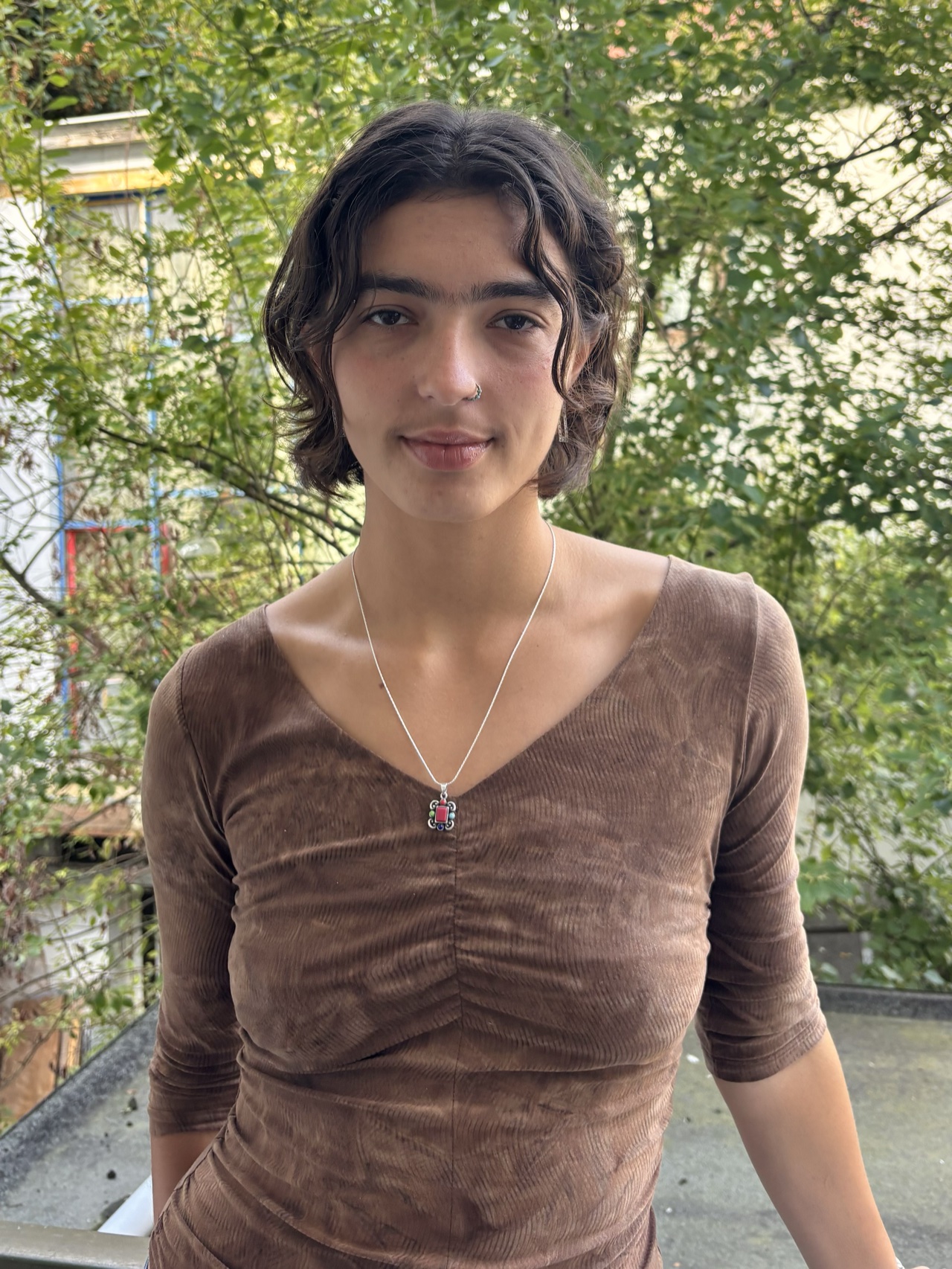
Antonia Torfs-Leibman is a PhD candidate based in the Music Department at Birmingham University. Her research background and interests intersect through cultural anthropology, ethnomusicology, and digital media theory, inclining specifically towards the cultural significance of amateur musicking in digital spaces. She co-runs the arts and research collective systm which produces a monthly exploration in digital music and media philosophy called Bop Fantasies on Kiosk Radio. In all research, she wishes to draw attention to the value of pedagogical accessibility and enchantment through storytelling and narrative.
Working across study 1, Musical Synthetic Media, Antonia will be researching the construction of personhood, culture, and power through synthetic media practices in contemporary hip-hop.